
Understanding your pay slip
If you’re employed, then you are entitled to an individual payslip. Whether you are paid weekly, fortnightly or monthly, your payslip is a summary of your earnings and any deductions.
Your payslip may contain a lot of information and so our guide explains everything you need to know about understanding your pay slip.
Your payslip explained
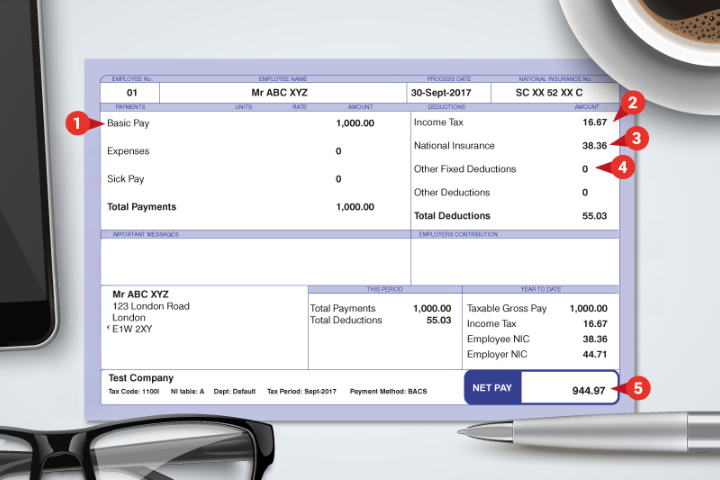
Figures are illustrative; actual tax codes and deductions may vary. Different rates apply in Scotland.
1. Your Basic pay
This is your full pay (sometimes called gross pay) before any deductions (such as Income Tax or National Insurance) have been made.
2. The tax you have paid
Your payslip should show the amount of Income Tax that has been deducted. The amount of tax that you pay depends on your salary and your Personal Allowance.
3. The National Insurance contributions that you have paid
Your National Insurance (NI) contributions are deducted from your gross pay. NI goes towards providing some benefits, for example a state pension.
4. Other fixed deductions
Your payslip should show any other fixed deductions that are made from your income. These are deductions that do not change in value between paydays, for example union membership fees. Your employer does not have to specify what these deductions are every month as long as you receive a statement explaining them once a year.
5. Your net pay
Your payslip should tell you the amount of take-home pay you receive after all deductions have been made.